
China on Friday operationalised its first fully electrified bullet train in the remote Himalayan region of Tibet, connecting the provincial capital Lhasa and Nyingchi, a strategically located Tibetan border town close to Arunachal Pradesh.

About 30 airports have been either built or under construction in Tibet and Xinjiang provinces which will boost China's civil and military infrastructure in the remote regions bordering India, the country's official media reported.
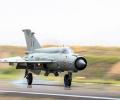
The MiG-21 episode demonstrates that procurement is always strategic.
Choices about what aircraft to acquire, who builds them, who supplies the spares, who trains the pilots and technicians are decisions with political consequences lasting for decades.
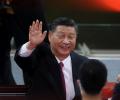
Xi's visit to Nyingchi, bordering Arunachal Pradesh, signals China's opening of another front to India in the eastern sector, observes Srikanth Kondapalli, the leading China expert.
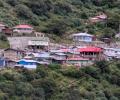
At the end of the discussion, the older Monpa said that if today the Chinese were to come inside India, "I will fight and kill them", prudently adding, "if they are of my age, if they are younger soldiers, I will not be able to fight". The entire village had a good laugh.

China on Thursday appreciated the stand of the Indian government, recognising the Tibet autonomous region as an integral part of China, and New Delhi's assurance that it will not allow 'Tibetan separatist' activities in the country."The Indian government has said that the Tibet Autonomous Region is an integral part of Chinese territory and that they do not allow Tibetan separatist activities in India. We express our appreciation to the Indian side," said a Chinese spokesperso

Prime Minister Modi on Saturday dedicated to the nation the Sela Tunnel built at an altitude of 13,000 feet in Arunachal Pradesh that will provide all-weather connectivity to strategically located Tawang and is expected to ensure better movement of troops along the frontier region.
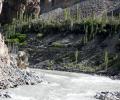
'China has thus far been cautious, emphasising its focus on development rather than weaponising water resources.'

Statements emanating from the recent Chinese Communist party congress suggest potentially increasing pressure on India with regard to the Dalai Lama and the Central Tibetan Administration in Dharamsala, notes former RAW officer Jayadeva Ranade.
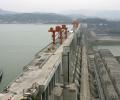
China has defended its plan to build the world's largest dam on the Brahmaputra River in Tibet, assuring that the project will not affect riparian states and safety issues have been addressed through decades of studies. The dam, estimated to cost USD 137 billion, has raised concerns in India and Bangladesh, but Chinese authorities maintain that the project has been thoroughly studied and safeguards are in place. The dam is part of China's efforts to develop clean energy and respond to climate change.
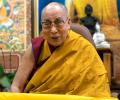
Though Beijing asserts the Dalai Lama's successor needs its approval, observers say it remains concerned as the present Panchen Lama, the number two spiritual leader who was appointed by it after unseating the boy nominated by the Dalai Lama, has not gained much traction in Tibet.

Major Khathing was the first man to hoist the Indian flag in Tawang. He also brought Bum La under Indian control.
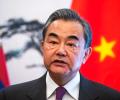
Was Wang Yi'S visit intended to remind India of 1962, asks Claude Arpi?
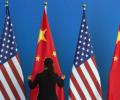
Secretary of State Mike Pompeo said he was taking action against an unspecified number of Chinese officials, including from the ruling Communist Party, under a US law that calls on China to let Americans visit Tibet.
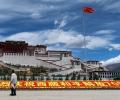
National security, consolidation of border defences and border security highlights China's Tibet policy, points out Jayadeva Ranade, the former senior RA&W officer and China expert.

Arpi deserves to be complimented for the commitment and hard work that have gone into this production. The frustrations of seeking reliable documentation from the catacombs of the Indian bureaucracy did not deter him from going after the best information available, and the result is one that he can take much satisfaction in. Ambassador Prabhat P Shukla, Member Advisory Council, Vivekananda International Foundation, reviews Claude Arpi's The End of an Era: India Exits Tibet.
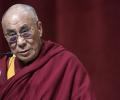
China is worried about the situation post the Dalai Lama and that his reincarnation could surface in Arunchal Pradesh, a region it claims as its own, but which is part of the Indian Republic, says former RA&W Additional Secretary Jayadeva Ranade.
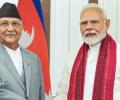
Nepal's claim on Lipulekh and Kalapani reopens a 200-year-old border dispute, while historical maps and treaties show the area belongs to India, asserts Lieutenant General Shakti Gurung (retd).
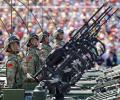
The move took place late last month and involved hardware being moved simultaneously by road and rail from across the entire region.
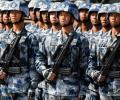
The sources said the exercise was a routine military drill by China.

China on Thursday said it 'firmly opposes' the United States recognition of Arunachal Pradesh as part of Indian territory and affirmed that Washington, DC has nothing to do with the India-China border dispute.
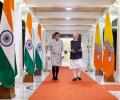
Although the special relationship might compel Bhutan to be considerate of Indian interests, new challenges will likely arise. An emerging new phase of relations will also call for fresh redlines between India and Bhutan, observe Harsh V Pant and Aditya Gowdara Shivamurthy.
The Tibetan government-in-exile and China are continuing to hold back-channel talks and the last round took place this month, just days before US President Joe Biden signed a legislation that seeks to press Beijing for a negotiated settlement to Tibet's demands for greater autonomy.
Chinese nuclearisation of Tibet endangering ecosystem, says new book
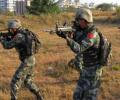
The brigade that conducted the drills was from the PLA's Tibet Military Command and is one of China's two plateau mountain brigades.

'The logical step is to challenge the very legitimacy of the Chinese claim over Tibet,' recommends Inspector General Gurdip Singh Uban (retd).

Samdong Rimpoche's visit to China materialised against the backdrop of strained India-China relations consequent to the face-off between Indian and Chinese troops at Doklam, says former RAW officer Jayadeva Ranade.

The seventh Tibet Work Forum was held in Beijing on August 28 and 29. Delhi should be deeply concerned, at a time India faces a precarious situation in Ladakh, because the TWF also defines China's western border policies, observes Claude Arpi.

China is acutely conscious of the need for the next Dalai Lama to be under its control. It was for this reason that China recently stressed their claim on Arunachal Pradesh. There were rumours that the next Dalai Lama may be found in Tawang. If that happens, India-China relations will become tense and there may be demands for the child to be handed over to the Chinese, points out Ambassador T P Sreenivasan.
"We hope that India will proceed from the overall interest of our bilateral relations and honour its commitment," Chinese Foreign Ministry spokesman Qin Gang told a regular news briefing when asked if Beijing was satisfied with the Indian government's handling of protests by Tibetans. Qin said no country in the world had recognised Tibet as an independent country and, since ancient times, it had been an inalienable part of China.

In underlining the role of border villages as custodians of India's frontiers, New Delhi is following China's example in Tibet.

China has sharply reacted to India's plans to construct a road network along the McMohan line in Arunachal Pradesh and expressed hope that India will not take any action which may complicate the situation before a final settlement is reached to end the boundary dispute.

A total of 750 pilgrims have been selected through a computerised draw for the upcoming Kailash Manasarovar Yatra in Tibet, marking the resumption of the pilgrimage after a five-year gap. The Yatra's resumption is seen as an attempt to normalize India-China relations, which were strained by the eastern Ladakh border standoff. The pilgrimage will begin in June and continue until August, with pilgrims traveling in five batches via the Lipulekh route and ten batches via the Nathu La route. The selection process was deemed "fair, computer-generated, random, gender-balanced" by the Ministry of External Affairs (MEA), which organized the pilgrimage.
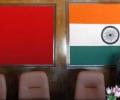
India on Friday strongly protested China's decision to issue invalid visas to some of its athletes for the Asian Games.

China on Friday inaugurated its second railway line in Tibet, built at a cost of $2.16 billion, close to Indian border in Sikkim, enhancing mobility of its military in the remote and strategic Himalayan region.
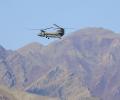
'Our strategy should be to 'hold the line' in the north on the Sino-Indian land frontier, but maintain and, if possible, enlarge India's current edge in the maritime south.'

'Arunachal Pradesh was, is, and will always be an integral and inalienable part of India'

How does blatantly claiming Indian territory help to maintain 'peace in border regions', is a mystery that only China can explain, notes Claude Arpi.

China, which claims Arunachal Pradesh as South Tibet, routinely objects to Indian leaders' visits to the state to highlight its claims. Beijing has also named the area Zangnan.
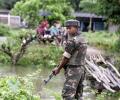
General Officer Commanding-in Chief of the Eastern command, Lieutenant General R P Kalita, however, said the Indian side is also continuously upgrading its infrastructure and capabilities to deal with any situation which may arise along the border.
